Total Pageviews

Showing posts with label Karen Bradley. Show all posts

Saturday, July 19, 2014

WVLDI Marks its First Anniversary with Programs at the AVMA Convention in Denver

Sometimes change happens quickly. Occasionally, important things happen very quickly. 

And that’s the case with WVLDI—the Women’s Veterinary Leadership Development Initiative—often simply called “Wivaldi” (like the classical composer, Vivaldi, but with a “W”). 

Here’s the story.

At last year’s AVMA meeting in Chicago, Dr. Karen Bradley stood for re-election for the position of chair of the House Advisory Council (HAC) of the AMVA’s House of Delegates (HOD).  When the voting was completed, not only was she replaced by a man as chair, but male HOD delegates were selected to fill the three open seats on the seven-person HAC.  As I wrote last year on this site, “Five Days in July”,

The stunning outcome reverberated across the floor and spilled out into the halls as the seven-member House Advisory Committee returned to being all male, having had only two women members in its history.[i]

Many people, men as well as women, were disappointed. AVMA president, Dr. Douglas Aspros shared an observation that would prove prescient. “A historic convention”, he said, referring to the fact that it was the Association’s sesquicentennial, “but bad outcomes for the HOD and great grist for the mill as we advocate for change.”[ii]

Shortly after the meeting ended, Karen Bradley sat at lunch. Composed, self-assured, and even smiling at times, she conferred with colleagues, considering how women could improve their leadership platform in an association where everyone seemed to acknowledge the desirability to have more women engaged, but no one seemed to know how it could be accomplished.

The interest in developing a group to support women’s leadership grew during the day. Dr. Stacy Pritt, who would become Vice President of the future WVLDI, described the momentum as “palpable, with people rapidly signing up to join a Facebook initiative, and plans for a web site and logo were being solidified.”  Under her leadership, those plans came to fruition within just a few short weeks after the Convention.[iii]


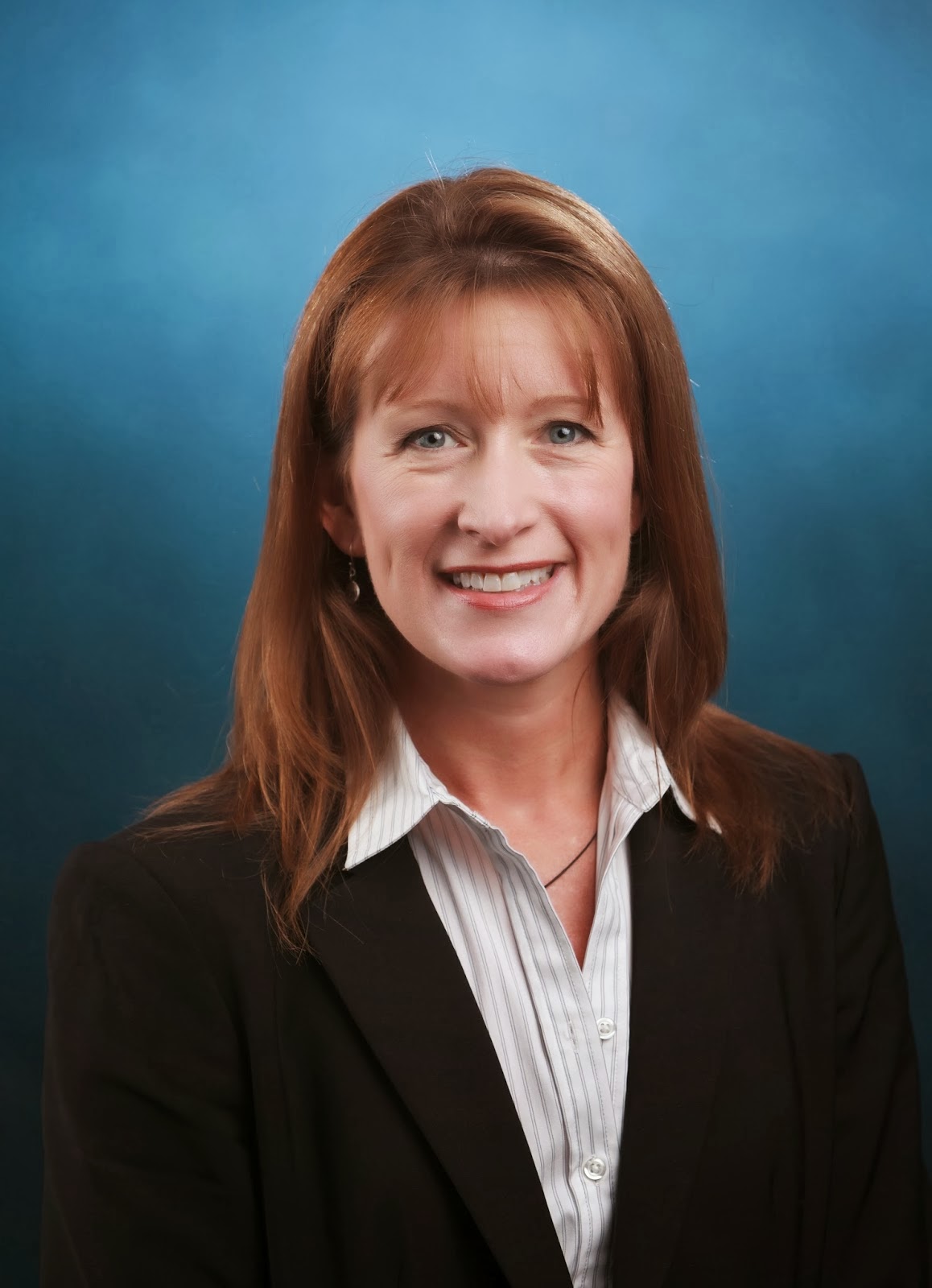
Dr. Karen Bradley, President WVLDI
(Photo provided by Dr. Bradley, 2013)

Less than two months later (September 11), Dr. Bradley hosted a conference call that included six women and two men. Three, including herself, are members of the HOD, and two were past presidents of the AVMA. There was one dean, and one dean emeritus. There was also a faculty member from a veterinary college, and a representative from a women’s foundation in Massachusetts.  These nine agreed to become the founding directors of WVLDI, with Dr. Bradley agreeing to serve as the inaugural president.[iv]

Almost immediately, WVLDI established Facebook and Linked In pages that energized grass roots discussions among its members. Lectures and seminars were presented at the North American Veterinary Conference in January, and the Western Veterinary Conference a month later. A presentation given at the Denver student symposium in mid-March ignited student interest that had been kindled at a course in Women’s Leadership held at Cornell two weeks earlier.[v]  Student chapters of WVLDI were quickly established at three colleges,[vi] and a news article on that topic appeared in the Journal of the American Veterinary Medical Association.[vii]

Several aspiring female leaders have benefited already from the WLVDI’s mentorship and sponsorship.  They are participating in AVMA-sponsored leadership development programs and serve on AVMA committees.

In February, financial support and sponsorship was received by Ceva. In announcing her support for WVLDI, Dr. Karen Padgett, Ceva’s chief operations officer, companion animal (US), said, “We recognize how important it is to support the advancement of women to leadership, policy and decision-making positions within all areas of professional veterinary activity.”[viii] 

The AVMA’s support for the initiative is strong, and also includes financial commitment, as justified in a March 18th press release,
The WVLDI’s commitment to diversity and achieving leadership excellence in every sector of veterinary medicine is a natural fit with the AVMA’s strategic goal of enhancing participation and engagement of our membership through the creation of a culture of inclusion, transparency and community. [ix]


 From July 25th – 28th, WVLDI will be active at the AVMA Convention

Friday, July 25th, 1:00 – 4:50 pm
Colorado Convention Center, Room 702
Workshop: Develop Practical Skills for Becoming Confident and Effective Leaders[x]

Sunday, July 27th, 2:00 – 3:00 pm
Colorado Convention Center, Room 207
The Initiative to Develop Women Leaders in Veterinary Medicine (Hot Topics Session)

Monday, July 28th, 8:00 – 11:50 am
Colorado Convention Center
Women’s Leadership Development Symposium
8:00 - 8:50       Women’s Leadership: Minding the Gap and Sharing Solutions
9:00 – 9:50      Women of Vetlandia: Secrets to Success in the World of Organized Veterinary Medicine
10:00 - 10:50   Stories from the Trenches: Leaders from Multiple Areas of Veterinary Medicine Share Experiences and Lessons Learned
11:00 – 11:50  Round Table Wrap Up: Q and A Healthy Discussion

Monday, July 28th, 3:00 – 4:00 pm
Meet and Greet Reception
AVMA Welcome Center, Colorado Convention Center


WVLDI Vision:   To achieve leadership excellence in every sector of veterinary medicine that fully reflects the diversity of the profession and society.

WVLDI Mission:   To support women in seeking and achieving leadership, policy, and decision-making positions within all areas of professional veterinary activity.

As one of the inaugural directors of WVLDI, I warmly invite you to participate in the above activities. Men are critical to the success of this initiative, so regardless of your gender or year of graduation, please get involved if you can. At a minimum, please share your thoughts about balanced representation of our membership in the leadership of all sectors of the profession.


[i] Smith, Donald F. "Five Days in July: Catalyzing a New Wave of Women’s Leadership in the AVMA". Perspectives in Veterinary Medicine. July 29, 2013.
[ii] Smith, Donald F., Ibid.
[iii] Pritt, Stacy (DVM, MS, CPIA, DACAW; Director IACUC, University of Texas Southwestern Medical Center). Email to Donald Smith (Cornell University), July 17, 2014.
[iv] Three other directors, including a student representative and an ex officio representative from the AVMA; one of the original directors had to resign because of other responsibilities.
[v] Smith, Donald F. and Julie Kumble. "Women’s Leadership in Veterinary Medicine: A Course for Veterinary Students". Perspectives in Veterinary Medicine. April 2, 2014.
[vi] Cornell, Texas A&M and Virginia-Maryland Regional Colleges of Veterinary Medicine.
[vii] Larkin, Malinda. "Women’s leadership group goes to school". JAVMA News, posted June 18, 2014.
[x] Smith, Donald F. and Julie Kumble. "Women’s Leadership Development Workshop Featured at the 2014 AVMA Convention". Perspectives in Veterinary Medicine. July 11, 2014.


Dr. Smith welcomes comments at dfs6@cornell.edu

Friday, May 9, 2014

The Critical Role of Mentors for Veterinary Students

Donald F. Smith (Cornell University)
and Julie Kumble (Women's Fund of Western Massachusetts)
May 9, 2014

Mentoring is widely considered to be an essential ingredient in the success and future leadership of students. Nearly all of the women deans of veterinary colleges with whom we’ve spoken point to the absolute influence that mentors had on their trajectories.1 The belief, confidence and support of their mentors fostered for these women a sense of belief and confidence in them.

We took their lessons to heart and asked each of the 35 students in our course, “Women’s Leadership in Veterinary Medicine,”2 to identify a potential mentor and to interview her (or him) as a means to establish a first-time connection, or to further cultivate an already existing relationship.

Nurturing is a close cousin of mentoring, and some of us are fortunate enough to find people in our academic years who offer a good dose of each. New York Times Op Ed columnist, Charles Blow, defines the concept of nurturing as it relates to his professors and how pivotal they were in his college years.3 He also cites a new study that points to the fact that students report feeling like they’ve had mentoring or nurturing far too infrequently.4

While we believe that mentors within veterinary college are important to career development, we also stressed to our students the critical importance of reaching beyond the academy. However, there was a time in veterinary educational circles that mentoring was considered the exclusive provenance of veterinary college faculty. In the early days of the profession, one prominent academic, Dean Leonard Pearson5 who chaired the AVMA’s Committee on Intelligence and Education, insisted that just as “water runs downstream from its source … No profession can rise higher than the schools in which its members are trained, as these are the sources of the special knowledge…” Reporting on behalf of his committee in 1907, Pearson inferred that knowledge emanates from the veterinary colleges and that practitioners in the field would always be less informed than their teachers and only by having well-educated faculty could veterinarians ever be expected to be able to practice effectively.6

By the 1930s (if not before), that concept had been turned on its head and veterinarians outside of the universities were developing some of the major advances in clinical medicine and feeding them back into the universities.7 More recently, and especially since the development of the clinical specialty boards in the last half century, some of the most progressive practitioners and scholars can be found in private practice, research institutes, governmental agencies and nonprofits, as well as in academia.

We instructed the students in our course to reach outside the university to find potential mentors for their class assignment―because they have regular access to faculty here at Cornell, we insisted that they broaden their network. Some took a comfortable, but still valuable, route of interviewing veterinarians who had been instrumental earlier in their career, as they developed their credentials for applying to college. Others were venturesome, contacting people whom they had only heard about, or whom they identified through the AVMA member data base (a marvelous resource, by the way).

Aziza Glass, who is interested in a career in biomedical science, tracked down and interviewed four-time space traveler, Dr. Richard Linnehan, who told her that veterinary schools need to find ways to move beyond their classical mindset to include One Health as a crucial part of veterinary theory, education and practice sets.8

Because of her interview with Dr. Karen Bradley, founder of Women’s Veterinary Leadership Development Initiative, Jordan Daniels was energized at the increasingly active role that dynamic and courageous practitioners can play in transforming organized veterinary medicine and making it more responsive in the 21st century. She took that verve and, together with several other students in the course, launched the first student chapter of the Women’s Veterinary Leadership Development Initiative.

Yet another student interviewed Dr. Valerie Ragan, director of the Center for Public and Corporate Veterinary Medicine. Another interviewed a women who is one of the most creative and skilled deans in the country.

These are not just insightful and helpful interviews, but they represent introductions to some of the truly great leaders of our time with the potential for these people (both women and men) to affect the careers of students in a meaningful and sustaining manner.

We agree with Mr. Blow that mentors are important and they are often available in the students’ college environment. But as educators of future professionals we must insist that more of our educational offerings tie directly to experts and leaders outside the academy. To be competitive in today’s veterinary environment, our students should develop strategic networks and mentoring relationships that include the breadth of the profession.


1 Smith, Donald F and Julie Kumble. Mentoring as a Career Factor: Six US Women Deans Reflect. Perspectives in Veterinary Medicine.Sept 12, 2013.
2 Smith, Donald F and Julie Kumble. Women’s Leadership in Veterinary Medicine: A Course for Veterinary Students. Perspectives in Veterinary Medicine. April 2, 2014.
3 Blow, Charles M. In College, Nurturing Matters. New York Times, May 7, 2014.
4 Ray, Julie and Stephanie Kafka. Life in College Matters for Life After College. Gallup Economy, May 6, 2014.
5 Leonard Pearson VMD was the third dean of veterinary medicine at the University of Pennsylvania (1897-1909).
6 Pearson, Leonard, Report of the Committee on Intelligence and Education. Proceedings of the American Veterinary Medical Association 1907. (Philadelphia, J.B. Lippincott Company), 1908.101-102.
7 Smith, Donald F. 150th Anniversary of Veterinary Education and the Veterinary Profession in the United States. J Vet Med Educ 37(4) 2010, 322-323.
8 Glass, Aziza. A Student Interviews a Veterinary Astronaut. Perspectives in Veterinary Medicine. April 28, 2014.

Dr. Smith invites comments at dfs6@cornell.edu


Thursday, February 27, 2014

Western Veterinary Conference Hosts Women's Leadership Symposium

By Donald F. Smith, Cornell University
February 27, 2014

Last week’s symposium on Women’s Leadership in Veterinary Medicine at the Western Veterinary Conference (WVC) in Las Vegas attracted over 100 people during the four-hour presentation. The audience included recent graduates, like Dr. Eva Evans, a Las Vegas practitioner who graduated just 20 months ago from the University of Tennessee, and Dr. Sarah Coburn, a Public Health Officer and practicing veterinarian on the North Slope of Alaska. She graduated from Colorado State University in 2009.

Most of the attendees were already experienced leaders in the profession. Jennifer Durenberger, DVM (2002), JD, is the Director of Racing for Massachusetts. Colonel Robin K. King, DVM, PhD, Dipl American College of Veterinary Preventive Medicine, another mid-career veterinarian, told me that she came to the symposium because she wanted to learn more about women’s leadership opportunities in the military. Dr. Dave Gerber, as practitioner in Idaho, excitedly told me he “gets it” —that is, he understands the need for more women in leadership. He shared with me his interest in reading Sheryl Sandberg’s book “Lean In,” given to him recently by one of his daughters.

Besides Dr. Douglas Aspros, immediate past president of the AVMA and one of the four speakers, other senior AVMA executives included Dr. Ted Cohn, president-elect, and Dr. Janet Donlin, CEO of the AVMA’s Professional Liability Insurance Trust.   

Also present was Dr. Karen Padgett, Chief Operating Officer of Ceva Animal Health, LLC. At the midway juncture of the morning’s presentation, she presented a check for $15,000 to Dr. Karen Bradley, president of the Women’s Veterinary Leadership Development Initiative (WVLDI). This extraordinary financial support—the first of its kind from industry and just six months after the WVLDI was established—provided an unquantifiable boost to morale for those who have worked tirelessly to launch the initiative.  Just two months ago, the American Veterinary Medical Association provided $25,000 in program support. This support from Ceva and the AVMA allows the WVLDI is to launch several new initiatives, and make plans to reach broader audiences of veterinarians.

As I listened to Dr. Padgett speak to the WVLDI directors later that day in a joint strategy meeting, I could not help but remark publically that I had seldom met anyone whose leadership skill was so evident in personal style, commitment, and action. What an honor for the group to benefit from her company’s support and encouragement. 

Lea-Ann Germinder of Germinder & Associates, Inc, one of the leading communications specialists in veterinary medicine, announced the attendance of many representatives of the media, in including the Journal of the American Veterinary Medical Association and DVM360.

Dr. Karen Bradley, Onion River, Vermont

The program featured four presenters. Drs. Aspros, Dr. Bradley and I represented organized veterinary medicine, practice ownership, and academia. Julie Kumble of the Women's Fund of Western Massachusetts represented the broader domain of women’s leadership in society.

Julie Kumble and I lectured for the first two hours under the title, “Minding the Gap and Sharing Solutions,” referring to the gap between the large percentage of women in the profession as a whole, and the relatively small percentage who occupy senior leadership positions. We presented data and anecdotal information gathered from interviewing over 40 leaders in the veterinary profession—including several men—to raise the awareness of leadership challenges (we used the prevailing term, “leadership gap”) in the four areas of organized veterinary medicine, academia (especially the dean level), industry, and clinical medicine (especially ownership of veterinary practices).  

Dr. Douglas Aspros, New York
One goal of our presentation was to describe challenges women face in attaining leadership positions by examining institutional and systemic barriers to women’s advancement. We also shared information about those gender-based perceptions and personal traits that sometimes hinder attainment of leadership positions for women. To give concrete examples of success stories gleaned from our many interviews, we shared best practices from within and outside of the veterinary profession. For example, we presented data on how Iowa State Veterinary Medical Association has made institutional changes to assure greater representation of women and also younger veterinarians in their leadership team in the past 12 years.

Ms Julie Kumble, Massachusetts
The second part of the symposium, presented by Drs. Bradley and Aspros, was aptly named, “Women of Vetlandia, How to find personal and professional success in the world of organized veterinary medicine.”  By tag-teaming in an entertaining and informative manner, they outlined how veterinarians can get involved in the professional affairs at a regional, state, and national level. They described the number and variety of opportunities in a manner that made it appealing for veterinarians in all stages of the profession, as well as how to balance day-job responsibilities with broader service. As the more recent graduate, Dr. Bradley shared personal insights into how this balance could be achieved, even as a mother, wife, and co-owner of a three-doctor practice.

During the final hour of the symposium, the audience was invited to sit in the front of the auditorium. The four speakers and two additional directors of the WVLDI (Drs. Rachel Cezar and Stacy Pritt) convened a more direct exchange, providing the opportunity for everyone to participate. For many attendees, this was the most interesting part of the session.

Dr. Cezar, who also served as moderator of the program, had the additional responsibility of collecting and summarizing the evaluation forms completed by attendees. She identified several issues that should be addressed before a similar program of this nature is presented in the future. For example, we need to provide greater clarity about what the WVLDI can provide for women veterinarians, such as information on leadership training programs and mentoring. We were also urged to provide information on women in a broader array of specific segments of the profession, such as the military. Some asked how students can get involved; and others were disappointed that we did not provide more opportunity for interactive participation.

We also received many positive comments: “THANK YOU, THANK YOU”; “Every vet should be here [attending];” “This has been a long time coming;” and “Looking forward to getting involved.” Both constructive criticism and positive responses provided encouragement and guidance for moving forward.

For me, the capstone of the feedback was a comment the following morning by Dr. Joni Samuels, a practice owner from southern California and incoming director of the WVC, as we rushed past each other to our respective meetings. A friend for many years, and one whom I can depend upon for being thoughtfully observant, Joni said, “You guys have the right approach and are on track. Now all you need to do is find answers!”

With guidance from people like Dr. Samuels and other leaders in the profession, I think we shall find answers and help move veterinary medicine forward.


Saturday, February 8, 2014

Women's Leadership in Veterinary Medicine to be Featured at the Western Veterinary Conference

By Donald F. Smith, Cornell University
Posted February 8, 2014

Join the directors of the Women's Veterinary Leadership Development Initiative (WVLDI) for a four-hour interactive symposium on Women's Leadership in Veterinary Medicine at Western Veterinary Conference in Las Vegas.


Monday, Feb 17, 2014; 8:00am - 12:00pm

Presenters: Karen Bradley, Julie Kumble, Douglas Aspros and Donald Smith

Karen Bradley, DVM, President WVLDI
Partner, Onion River Animal Hospital, VT
Julie Kumble, MEd
Interim CEO, Women's Fund of Western MA

Douglas Aspros DVM, Past President of AVMA;
Partner, Bond Animal Hospital and
Pound Ridge Veterinary Center
                      
Major Symposium Themes include:
  • Understanding the gap in women's leadership in all professions, with special emphasis on veterinary medicine.
  • Explaining why 30% women in leadership positions in organized veterinary, college administrations, and veterinary corporate boards is critical to maximizing productivity and promotion a diverse and work-friendly environment.
  • Identifying and overcoming some of the factors that contribute to the gap between male and female financial compensation.
  • Identifying the advantages of pursuing opportunities for leadership in the AVMA and state associations, and describing how veterinarians can prepare themselves for these positions.
  • Providing case examples of state organizations, veterinary colleges and corporations that are advancing women's leadership, and describing institutional and other changes that made this possible.
  • Understanding how to develop personal skills to increase the likelihood that you will be prepared for leadership positions.

Please accept my personal invitation to attend part or all of the symposium.

We are grateful to the American Veterinary Medical Association and 
also CEVA Animal Health
for their commitment and generous support.


Dr. Smith can be reached at dfs6@cornell.edu