Total Pageviews

Showing posts with label Cornell College of Veterinary Medicine. Show all posts

Tuesday, October 7, 2014

Dr. Sylvia Burg Salk '46 Salutes the Students Involved in Women's Leadership


By Donald F. Smith, Cornell University
Posted October 7, 2014

I recently received a hand-written, two-page letter from a veterinarian who graduated from Cornell in 1946.  It was my first communication from Dr. Sylvia Burg Salk since she returned to Cornell for her class reunion eight years ago. That reunion, the only one she ever attended, had been a partial reconciliation visit for Dr. Salk as the memories of her student days at Cornell were not pleasant.

Dr. Syliva Burg Salk, center seating during Class of 1946 reunion, June 1946
Photo by Cornell University

Sylvia Burg was a bright, young Jewish woman who grew up in the small town of Hunter, deep in the Catskill area, 125 miles north of New York City.  Though Cornell had accepted its first woman veterinary student in 1905, and by 1940 had graduated many more women than any other US veterinary college (15), Burg’s first application was denied.

She applied the following year, and was again denied.  Frustrated and angry, Sylvia’s mother traveled to Cornell and met with the dean, Dr. William Arthur Hagan. “I know neither the substance nor the tenor of the conversation,” Dr. Salk told me when I visited her in California in 1999, “but it must have been interesting because I was admitted the following fall on my third attempt.”[i]

Sylvia met her future husband “over a horse carcass during dissection lab.” Herman Salk had been a veterinary student at Middlesex College in Massachusetts, the college established in the mid-1930s, primarily to accommodate Jewish students, but forced to close by the AVMA a few years later because it was alleged to have been substandard. At the time, the feeling of many close to the situation was that the closure of both the Middlesex medical and veterinary colleges was related to anti-Semitism.[ii]  Regardless of the circumstances that sealed their fate, Herman was one of the few students admitted to Cornell as a transfer student to complete his education.

Dr. Herman Maurice Salk, Graduation Photo
Courtesy of Cornell University
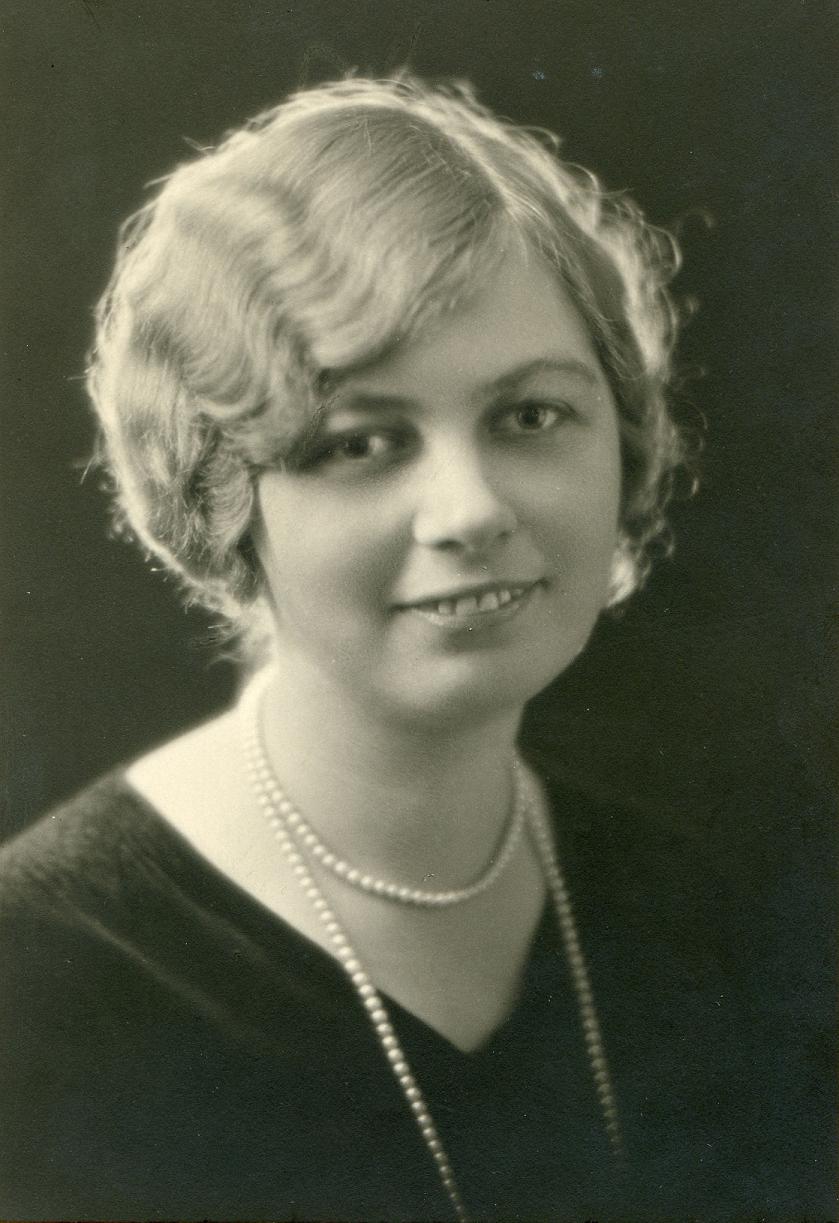
Dr. Sylvia Burg Salk, Graduation Photo
Courtesy of Cornell University

The Salks moved to Vermont following graduation and Sylvia became the state’s first female veterinarian. They joined with a classmate named George Brightenback, with Sylvia doing the small animal work while the two men looked after the large animals in the practice. After a brief period in which Herman worked in the virology department of Parke-Davis labs, the Salks moved to a farm in western Pennsylvania where Herman raised laboratory mice for $100 a month. They supplemented their income by operating a small animal practice out of their home using the kitchen table as an operating table.

Those were also the days when Herman's brother, Jonas Salk, was feverishly working at the nearby University of Pittsburgh to develop the polio vaccine that bears his name. The children of the two families grew up together during this period in the early 50s when the vaccine was being developed and tested.

In 1954, Herman and Sylvia left the East, moving to the desert region of California, where they opened a small animal practice.

For a substantial part of their adult lives, however, the Salks did humanitarian and veterinary work in developing cultures. Their international involvement began in the late ‘60s when they hosted African exchange students in their home. A decade later, their son, Steven (a veterinary graduate from UC, Davis) worked with the Masai tribe through the USAID program. Sylvia visited him in 1975, and was so moved by the need amongst the Masai that she convinced her husband to make their ultimate career move.

Answering an advertisement in the AVMA journal to work with Heifer Project International, the Salks sold their practice and started a new chapter of their life. They spent the next several years on a series of tours of duty, working in Africa (Cameroon and Egypt) and in the Far East (Thailand, China and Laos). When they returned to the US, they worked in the Southwest with the Navajo and Hopi nations.

Their experiences were remarkable, Dr. Sylvia Salk told me.

We lived under challenging conditions, but our work was satisfying. We taught vaccination strategies, production medicine, nutrition and management. We tried to leave places better than we found them.

In 1990, four and a half decades after she left Cornell, Dr. Sylvia Salk enrolled in a MS program in international public health at Loma Linda University.  As the only veterinarian in the class—and certainly having the most abundant world experience—she was able to bring a broad perspective to the program, especially in the area of zoonotic diseases. For example, she reminded faculty and students alike to check cattle for scabies while visiting villagers for the same condition.  She also described the efficiency of management opportunities, describing techniques for raising ducks and pigs over the village fish pond.

One of the Salks’ many legacies is a scholarship program they established in the late ‘70s that provided funding for African students to come to the US for college education in the health sciences, education or agriculture. Dozens of students benefitted from the program, including a young Masai woman who became the first woman from her tribe to pursue an advanced degree.

Returning to that letter I received from Dr. Salk on September 9th, she said how happy she was to read the current issue of “Scopes,” the college newsletter in which she learned of the Cornell students establishing a chapter of the Women’s Veterinary Leadership Development Initiative. 

She was excited that things had changed from when she had been a student. I could sense her pride in being one of the survivors from very challenging era in our history, and contrasting her experiences with the changes that we see today.[iii] 

Reading about the student chapter of the Women’s Veterinary Leadership Development Initiative restored a feeling of pride in Cornell that I had lost many years ago when I was a student in the early ‘40s. Both my husband, Herman, and I felt disenfranchised. As the years went by … we never truly reconciled with our Alma mater.…

Now that I’m in my 91st year, I fully admire what you and Cornell are doing. Thank you for your dedication to a long-neglected phase of Cornell history.

One of the challenges we face in researching and teaching the history of veterinary medicine is that we tend to see the profession in the context of our own times. How soon we forget what it was like only two or three generations ago. Viewing the transformation of the profession across decades of time is important, however, and we must not too easily dismiss the experiences of those whose persistence and success despite tough odds have helped shape the opportunities we have today. 

Especially for the women such as Dr. Sylvia Burg Salk, to whom we owe so much.


[i] Salk, Sylvia Burg (DVM 1946). Interview with Donald F. Smith (Cornell University) in Palm Springs, California, 1999.
[ii] Smith, Donald F.  Middlesex Veterinary College: A Short-Lived Experiment in Meritocracy. Perspectives in Veterinary Medicine. October 24, 2013.
[iii] Salk, Sylvia Burg (DVM 1946). Letter to Donald F. Smith (Cornell University) Sept 9, 2014.

Dr. Smith invites comments at dfs6@cornell.edu

Tuesday, November 29, 2011

White Coat Ceremony at Cornell's College of Veterinary Medicine

Posted November 29, 2011
by Donald F. Smith, DVM, Cornell University


Cornell’s 8th annual White Coat Ceremony for third-year veterinary medical students is Saturday, December 3. The concept of the “white coat” donning for medical students was inaugurated at Columbia’s College of Physicians and Surgeons, and shortly thereafter adapted for veterinary students at Washington State University.

Cornell adapted the practice in 2004, but with a twist. Instead of holding the ceremony at the beginning of the four-year curriculum, we decided to mark students’ transition from the preclinical to their clinical education as they began their hospital rotations.

Canada honored Sir William Osler in 1969
on the 50th anniversary of his death with this
commemorative postage stamp.
Photo by author.
Historically, both medical and veterinary students were largely “book taught” until about 100 years ago when the curriculum was expanded to include one or two years of clinical education in the hospital ward (or at the farm or stable). Dr. William Osler, a physician at Johns Hopkins Medical School but who had previously worked at McGill University’s veterinary college, is credited with being the first medical school professor to bring students out of the lecture hall into the wards.

Osler observed, “He [or she] who studies medicine without books sails an uncharted sea, but he who studies medicine without patients does not go to sea at all”. “Listen to your patients”, he would tell his medical students, “he [or she] is telling you the diagnosis.”

Cornell professor Dr. William Hornbuckle is the quintessential small animal diagnostician. Like Osler, the respect he has from over four decades of students is legendary. Dr. Hornbuckle is a stickler for getting an exhaustive history from the client. But once that information is gathered, he is adamant that the student "concentrate on the physical examination. Don't get distracted by talking to the client or your colleague for this is your chance to listen to the animal and what it is telling you."

Because the white coat symbolizes the generic and traditional professional attire of the health sciences, we at Cornell decided in conjunction with our alumni executive board (the co-sponsors of the white coat ceremony) to follow the lead of our medical school colleagues. We did this while also recognizing that many veterinarians—large animal and wildlife practitioners, for example—do not typically wear white coats in their practices.

As the veterinarian mentors of the Class of 2013 formally robe or “coat” each student this Saturday, they are following the deep-rooted tradition of veterinary education at Cornell where faculty promote the essential role of patient-oriented learning. It is in the clinical environment—whether the hospital ward, the farm or stable, or the wildlife sanctuary—that observations of both illness and health are embedded in the new veterinarian’s memory, and that textbook knowledge is applied with relevance to the patient.

Friday, October 21, 2011

Dr. Mitch Kornet and A Tradition of Mentoring

Guest Blog by Michelle Pesce, Cornell DVM Class of 2012
Posted October 21, 2011

Careers for Veterinarians Series

When Mitchell Kornet took his 89-cent hamster for a six-dollar veterinary appointment in 1968, he was making an investment in a good deal more than the rodent’s well-being. Dr. Albert Drolesky’s kind attention that evening was what first led 13-year-old Mitch to direct his aptitude for science towards veterinary medicine.

The 1979 graduate of Cornell University’s College of Veterinary Medicine considers himself fortunate to have had a series of mentors throughout his education and early career. Their guidance helped him establish a successful small animal practice with loyal clientele, as well as a deep-rooted sense of benevolence towards students pursuing a career in veterinary medicine.

Dr. Mitch Kornet CVM (Cornell '79) examining
his own dog, Ferrous, at the Mid Island Animal Hospital.
As the first of his family to attend college, Mitch was apprehensive about attending Cornell as an undergraduate. After finding his footing academically in his freshman year, he sought experience in the large animal clinic as a sophomore. Dr. Lawrence Kramer, who had recently been appointed as head of the clinic, offered Mitch a job in the pharmacy dispensary and took a special interest in his development as a prospective veterinary student.

Following his first year of veterinary college, Mitch returned to the practice he had visited years before with his hamster. The new practice owner, Dr. Richard Lange, helped Mitch understand the workup on cases and also shared with him how much fun one can have being a veterinarian.
Dr. Kornet had been among the youngest students in his graduating class, and his youth was recognized by clients when he took ownership of Mid Island Animal Hospital in Hicksville, NY in 1983 at age 28.
“I received a hostile call from a client one afternoon… she proceeded to give me a list of demands that included which employees to retain and hours that I should be open. I listened carefully and was very polite. Then Mrs. Weber said, ‘and one more thing young man…..’ That didn’t sound right to me and I had to take control of the conversation – quickly. So without thinking, I said, ‘That’s enough Mrs. Weber, from now on when you address me, you will call me Dr. Young Man.’”
Mrs. Weber hung up on “Dr. Young Man” that day, but did eventually return to the practice. Mid Island Animal Hospital evolved into a busy American Animal Hospital Association-accredited small animal practice as hours were extended, emergency appointments were invited, and the employee base expanded.
In 1998, Dr. Kornet began volunteering as a member of the Long Island Veterinary Medical Association’s Disaster Preparedness Plan. A far cry from anyone's expectations, the plan was put into action following September 11th, 2001.
Mid Island Animal Hospital, Hicksville, N.Y.
In the ensuing two months, Dr. Kornet assembled teams of veterinarians and technicians who worked 12-hour shifts around the clock at veterinary triage site for search and rescue dogs. For his efforts, Dr. Kornet was honored as Long Island’s Veterinarian of the Year.
As a student in Dean Smith‘s “Versatile Profession” course in February 2010, I took great interest in his reference to Dr. Mitch Kornet, and wondered if his practice would merit a visit. I mailed him a letter and a copy of my résumé, and what followed was one of the most worthwhile summer jobs I’ve ever had, redefining my concept of a model small animal practice.
At Mid Island Animal Hospital, the greatest care and attention is provided to every patient, whether routine or unusual, and the legacy of mentorship that had  begun many years earlier was passed onto my generation of veterinary students, as well as aspiring animal health technicians.  
As Dr. Kornet reminded me: “What’s remarkable to me is that no matter what generation we are in, we are all the same. Veterinarians want to learn, do well, and be good doctors for the sake of our patients. We love animals, and we have unending energy to make the lives of our patients better. And because of the broad scope of our training we are capable of doing some extraordinary things.”

Author Michelle Pesce, Cornell's DVM Class of 2012, and Dr. Mitch Kornet '79
Michelle grew up in Massapequa, N.Y. on the southern shore of Long Island.

Friday, October 7, 2011

The First Doctor of Veterinary Medicine in the U.S.

By Donald F. Smith, Cornell University
Posted October 7, 2011.

Everyone has to start at the beginning, even if that person is destined to become one of the most famous veterinarians in history. On this date, October 7, 143 years ago, Daniel Salmon began his veterinary studies when Cornell University opened its doors for the first time. He would become the nation's first D.V.M. graduate.(1)

Celebrating what came to be known as the university's Inauguration Day, founder Ezra Cornell said, “I hope we have laid the foundation of an institution which shall combine practical with liberal education …. [and] which shall prove beneficial to the poor young men and poor young women of our country.” Wisely, Ezra Cornell also insisted that veterinary medicine be among the subjects to be taught from the very beginning of his new university.

Daniel Elmer Salmon
(Photo by Cornell University)
James Law, an eminent Scottish veterinarian had arrived in Ithaca only weeks earlier to become the nation’s first university professor of veterinary medicine. Though Professor Law had several students who became leaders in veterinary medicine and animal health research in the late 19th century, none was more famous than Daniel Salmon.

When the Bureau of Animal Industry was established in 1894 to promote the health of livestock, and to establish a national standard for meat inspection, Daniel Salmon was chosen as its first director. He is also attributed with the discovery of the bacterial organism that bears his name, Salmonella.

The students who started their veterinary education at Cornell in August of this year have a special kinship with every new veterinary student who has entered this university since Daniel Salmon. Though they are now immersed in the challenging studies that are necessary in the making of a veterinarian, they can also look with pride at the man who started on a similar journey 143 years ago today.

(1) Salmon actually received his veterinary degree in 1872.  At that time, the degree was called the B.V.M. and he was the the second Cornell student to be so recognized.  Salmon then did postgraduate work in Europe and Cornell to qualify for the DVM degree in 1876.  In the modern era, that additional work would roughly quality for what we now designate as the PhD. So, perhaps it would be more accurate to say that Salmon received his equivalent of the DVM in 1872, and the modern equivalent of the PhD in 1876.

Dr. Smith invites comments at dfs6@cornell.edu

Monday, June 13, 2011

Veterinarians Networking Face to Face

Posted June 13, 2011
Written by Donald F. Smith, Cornell University

No sooner had the ink dried on 2,600 DVM diplomas for the veterinary students who graduated from U.S. colleges in 2011, than these same colleges started to welcome alumni/ae back to campuses for their five-year reunions. We at Cornell hosted our reunion June 9-11.

As a person who has always been interested in veterinary careers and the progression of student-to-professional, I like to talk to alumni of all ages to discover their secret of a lasting and fulfilling career. Last Saturday evening, I had the privilege to host the dinner for members of Cornell's Class of 1946. Now in their mid to late 80s, they talked with great passion about how their professors and practice mentors decades ago prepared them for a lifetime helping animals. Dr. Roger Batcheldor even credited the memory of his grandfather, an 1896 graduate of Harvard's veterinary college, as his inspiration.

The largest proportion of returning Cornell alumni this year were members of the Class of 1986. Dr. Janet Lipman, a small animal veterinarian and practice owner in New Jersey, echoed the feelings of many of her classmates,
"After 25 years of being scattered across the country, we spent our weekend like dear old friends. We rekindled friendships, sharing many wonderful memories of our time together and exchanging news of our families and careers. Though we have chosen many different career paths, I was especially struck by our continuing passion for veterinary medicine and the joy and satisfaction that my classmates experience as veterinarians. It is a wonderful profession!"

 
Dr. Lisa Freeman '86
Vice President, Northern Illinois University
Photo courtesy of N.I.U.

Also marking her 25th anniversary, Dr. Lisa Freeman’s career took her into academia where she now leads institutional research and graduate studies as vice president of Northern Illinois University. I interviewed Lisa as part of my blog series, “Careers for Veterinarians”, and she shared story after story about the value of her classmates in advancing and enriching her career. She has this advice for beginning veterinary students,
“I tell veterinary students to look around the room during their first day of classes. Everyone who is sitting next to them is the start of their professional network and these relationships are to be valued. I really believe that and most people in the Class of 1986 agree because we have almost 40 people here at reunion.”
At whatever stage veterinarians are in their career progression, reaching out to network face to face with former classmates is important. And, when some of the networking occurs back on the campus of their alma mater, it creates enthusiasm among the faculty of the college and inspires the current students who see their energy and evidence of their fulfillment in being veterinarians.

Dr. Smith invites comments at dfs6@cornell.edu.

Monday, May 30, 2011

Stephen Laudermilch, DVM 2011 Joins a Rural Practice Steeped in History

Posted May 28, 2011
By Donald F. Smith, Cornell University

CAREERS FOR VETERINARIANS Series

Stephen Laudermilch entered veterinary college in 2007 with the singular goal of returning to his home town to join his father and brother in one of the oldest and most distinguished rural veterinary practices in Pennsylvania. Dating back to 1917, what is now called Rome Veterinary Center is located about 60 miles south of Ithaca, New York, just 15 miles over the Pennsylvania border.


Dr. Stephen Laudermilch (center), with Drs. Ben (L) and Donn Laudermilch (R)

Being from a closely-knit family, the proximity of Ithaca to Rome was one of the reasons why Stephen selected Cornell over the three other northeastern colleges that offered him a seat after only three years undergraduate study.

During his time at Cornell, Stephen would make over 300 trips between Ithaca and Rome to visit family and work in the practice where he will now be a full time associate. “Being able to go back home to practice is a huge asset for me, because the establishment is family-oriented and I know right from the beginning that the level of trust and involvement will be high”.

Stephen’s father, Donn Laudermilch (U Penn ’79) agrees. “Stephen has been doing veterinary calls with me since he was two-years-old. He would sometimes join me before school, and often ride with me on calls that extended way into the night, helping treat cows with calving problems or most metabolic conditions that occur just before or after parturition.”

Stephen was one of about twelve of the 87 students in his class with an interest in food animal programs. However, because he realized that there are no guarantees that the dairy industry in upstate Pennsylvania will remain stable in the future, he took full advantage of Cornell’s excellent small animal teaching program so that he could diversify his practice as appropriate to meet future needs in the community.

The practice is currently 85% dairy cattle, with the remainder being equine and small animal medicine. For the top-producing dairies in the practice area, Stephen his brother, Ben (Virginia-Maryland ’07) and their father, all agree that new techniques they are adopting, like in vitro fertilization, could add tremendous value to the dairy industry.

The veterinary profession faces shortages of well-educated food animal veterinarians seeking to work in rural areas. The Laudermilch family provides an excellent example of how committed veterinarians continue to advance animal health in farming communities and also support the public health needs of society by assuring a safe and abundant source of animal-based protein.

Stephen Laudermilch’s interest in serving people goes beyond rural veterinary practice.  He desires to use his veterinary skills to establish relationships in foreign countries with the human medical profession--two of Stephen's siblings are medical doctors and a third is in training--to help people with both their physical health and their productivity in agriculture. With veterinary medicine as a step-stool, Stephen's goals are to reach people for Christ through veterinary medical missions.

Dr. Smith invites comments at dfs6@cornell.edu

Dr. Koji Yasuda: Connecting Veterinary Medicine in Japan and America

Donald F. Smith (Cornell University)
Posted May 30, 2011

CAREERS FOR VETERINARIANS Series

When Koji Yasuda received his DVM from Cornell last weekend, he joined his father and older brother, Junya, as a family committed to advancing veterinary medicine in both Asia and America. 

Koji (L) and Junya Yasuda relax after Koji received his DVM
 from Cornell University May 29th, 2011. Photo by author.

Koji’s father, Hidemi Yasuda, owns one of the most progressive small animal practices in Tokyo, and also manages a dermatology (IgE) diagnostic service (Spectrum Lab Japan) that employs four staff and receives over 10,000 samples per year from 4,500 veterinarians throughout the country. 

Junya (L) and his parents, Dr. Hidemi and Mrs. Sanae Yasuda.
Yasuda Veterinary Clinic, Tokyo, Japan (2010). Photo by author.

Junya, who already has a college degree in history, is in the process of finishing his veterinary education in Tokyo. Though he has been to the United States multiple times, he has decided to remain in Japan and ultimately take over the family business.

Koji, on the other hand and with his family’s full support, decided to make his career in the United States. He left home at age 15, attended a boarding school in New Hampshire. After receiving his BS and MS from Cornell, he became one of the relatively few international students to receive a DVM from Cornell.

Koji recently received his green card (signifying permanent resident) from the United States Citizenship and Immigration Services, and now embarks on a comparative pathology residency at the New England Primate Research Center at Harvard Medical School in June. With his commitment to the concept of the “One Health” advancing both human and animal medicine, he plans to establish a career in comparative pathology at either a veterinary or medical school setting.

Dr. Smith invites comments at dfs6@cornell.edu.

Thursday, May 26, 2011

Veterinary Class of 2011 - Congratulations and Best Wishes

Posted by Donald Smith (Cornell University)
May 26, 2011

On this Cornell Commencement weekend our 87 DVM graduates will be among the 2,630 nationally to become the nation's newest Doctors of Veterinary Medicine. They enter the veterinary workforce at a time when the demands and opportunities to promote animal health and welfare, public health, and biomedical research have never been greater.

Commencement Hooding Ceremony, Cornell Class of 2011
The new graduates will cite the Veterinarians’ Oath, at the Hooding Ceremony on Saturday afternoon, May 28th. The oath connects animal health, human health and animal resources, and states, in part: “I solemnly swear to use my scientific knowledge and skills for the benefit of society through:
·         the protection of animal health and welfare
·         the prevention and relief of animal suffering
·         the conservation of animal resources
·         the promotion of public health, and
·         the advancement of medical knowledge”
As is traditional, most of our graduates will enter practice initially, either in general small or large animal practice, or through an internship. However, by their fifth-year reunion, many will broaden their career scope. Those in the Army may be deployed overseas or have entered into a PhD program in epidemiology. Others will be engaged in research or advanced training in a clinical specialty like surgery or oncology; or will be employed in the pet food industry or a pharmaceutical company.


By their tenth reunion in 2021, many of today's graduates will be owners or associates in general or specialty practices involving a broad array of companion, farm and sport animals.  Others will be leaders in humane shelter medicine, homeland security, food quality assurance, in comparative biomedical research in a medical school, or in conservation medicine, perhaps internationally.


2011 is designated by U.S. Congress as World Veterinary Year
 in honor of the 250th anniversary of the veterinary profession.
Logo by Vet2011 and the AVMA

This year’s graduates enter the profession during the World Veterinary Year which has been designated by Congress to celebrate the 250th anniversary of the veterinary profession throughout the world. The congressional resolution cites many of the critical roles that veterinarians play in society beyond clinical practice, whether in public health, biosecurity, biomedical research, international development, disaster medicine, or in promoting the unique role that animals, especially pets, play in human health and welfare.

To the Class of 2011, congratulations on your remarkable achievements and best wishes as you assume the leadership of veterinary medicine for the next generation.

Dr. Smith invites comments at dfs6@cornell.edu

Wednesday, May 25, 2011

Joanna Asmus Sutorius, DVM (1929), Cornell's Fourth Woman Veterinary Graduate

Guest Blog by Michelle Pesce, Cornell Class of 2012
Posted May 25, 2011


This historical blog is in recognition of the 150th anniversary 
of the American Veterinary Medical Association (1863-2013).


Careers for Veterinarians Series

Like many young girls, Johanna Asmus took delight in the company of animals. She was a member of the Science Club at Ithaca High School and the idea of becoming a veterinarian had great appeal to her. Her proximity to Cornell, where her father was a professor, likely influenced her decision to pursue an education there. Being granted admission to Cornell is no simple task for prospective veterinary students today, but Johanna faced an even greater challenge. The year was 1925, and Johanna was to become only the fourth female graduate of the New York State Veterinary College (now the College of Veterinary Medicine).

Joanna Asmus Sutorius, DVM, graduation photograph 1929 (Cornell University photo)
Johanna’s father, Henry Asmus, was no ordinary professor. In 1913, he took a position as a farriery instructor at the veterinary college. A building had been newly constructed for his students, and was “the very finest place of its kind to be found in the country;” a country where horses were still the dominant form of transportation. A preeminent farrier until his death in 1939, Henry Asmus’ horseshoes still hang on display in Cornell’s current farrier shop.

Cornell's DVM Class of 1929 with photo (bottom center) of Joanna Asmus, the college's fourth woman graduate. Cornell University photo.
Johanna began veterinary college immediately after completing high school, as was the norm for students in 1925. Johanna’s daughter, Barbara Sutorius, explains her focus on small animal medicine. “The farmers who provided the large animals for the student vets to practice on wouldn’t let her treat their animals, so she only worked with small animals.” When her daughters inquired as to whether she faced discrimination, Dr. Sutorius denied it was ever a significant issue. “She was determined to ‘show the fellows’ that she could do it,” said her niece, Marianne Leavitt. In a 1960 interview by The Post-Standard, a Syracuse newspaper, Dr. Sutorius admitted she encountered disbelievers early on, but “after they found out I meant to stay and get my degree, the boys made things pleasant for me.” Johanna spent the summer of 1928 at the Westminster Dog Hospital on West 54th Street in New York City. Drs. Frank Miller and Trelford Miller welcomed her help that summer, with the latter making reference to the fact he was a student of Henry Asmus.

Dr. Sutorius considered continuing her studies in Vienna following completion of the DVM program in 1929, but it was not to be. She moved to Sayville, NY that summer with her husband, where he remained employed in spite of the stock market crash and ensuing Great Depression. “It was her aspiration to start her own small animal practice there,” her daughter Nancy Holland explains. “However, she was a product of her times. Because my Dad could provide very well for us, it would have been considered a mark against him to have his wife go off to work.” Dr. Sutorius instead worked as a relief veterinarian in various small animal practices for two years, and resumed this role in full when her three children reached school age.

Thirty years after her graduation, Dr. Sutorius reflected on her experience as one of the first to break ground for women in the veterinary profession. “I enjoy this work, so it doesn’t seem like any effort at all,” she told the Post-Standard interviewer. She had remained active in organized veterinary medicine, taking the position of Secretary-Treasurer of the Long Island Veterinary Medical Association in 1947.

Since Dr. Sutorius began her schooling, much had changed for women in the profession. “There are about 200 women veterinarians in the country,” she stated in the 1960 article. “Some are in general practice, others teach and work in research. One woman works in a zoo. Most people are pleased that a woman is going to treat their pet; however, I have had people turn around and walk right out of the office!”

By the conclusion of Dr. Sutorius’ career, veterinary medicine had seen a sharp increase in the proportion of female students. At the time of her death in 1989, roughly half of all graduating veterinarians in the United States and Canada were women.

In recent years, Dr. Sutorius’ family took a renewed interest in her experiences in the veterinary profession. A visit to Cornell revealed Henry Asmus’ influence on the college, as evidenced by display cases featuring his work. While no physical monument exists to commemorate Dr. Sutorius and other early female veterinarians, the conspicuous abundance of women in the college is a compelling testament to their efforts as pioneers.


Author Michelle Pesce, Cornell's DVM Class of 2012, is from Massapequa on the southern shore of Long Island. Dr. Asmus Sutorius also lived and practiced on Long Island.

Michelle expresses appreciation to Dr. Sutorius' family -- her daughters, Mrs. Nancy Holland and Sister Barbara Sutorius, and her niece, Mrs. Marianne Leavitt -- for their contributions to this article.