Total Pageviews

Wednesday, May 25, 2011

Joanna Asmus Sutorius, DVM (1929), Cornell's Fourth Woman Veterinary Graduate

Guest Blog by Michelle Pesce, Cornell Class of 2012
Posted May 25, 2011


This historical blog is in recognition of the 150th anniversary 
of the American Veterinary Medical Association (1863-2013).


Careers for Veterinarians Series

Like many young girls, Johanna Asmus took delight in the company of animals. She was a member of the Science Club at Ithaca High School and the idea of becoming a veterinarian had great appeal to her. Her proximity to Cornell, where her father was a professor, likely influenced her decision to pursue an education there. Being granted admission to Cornell is no simple task for prospective veterinary students today, but Johanna faced an even greater challenge. The year was 1925, and Johanna was to become only the fourth female graduate of the New York State Veterinary College (now the College of Veterinary Medicine).
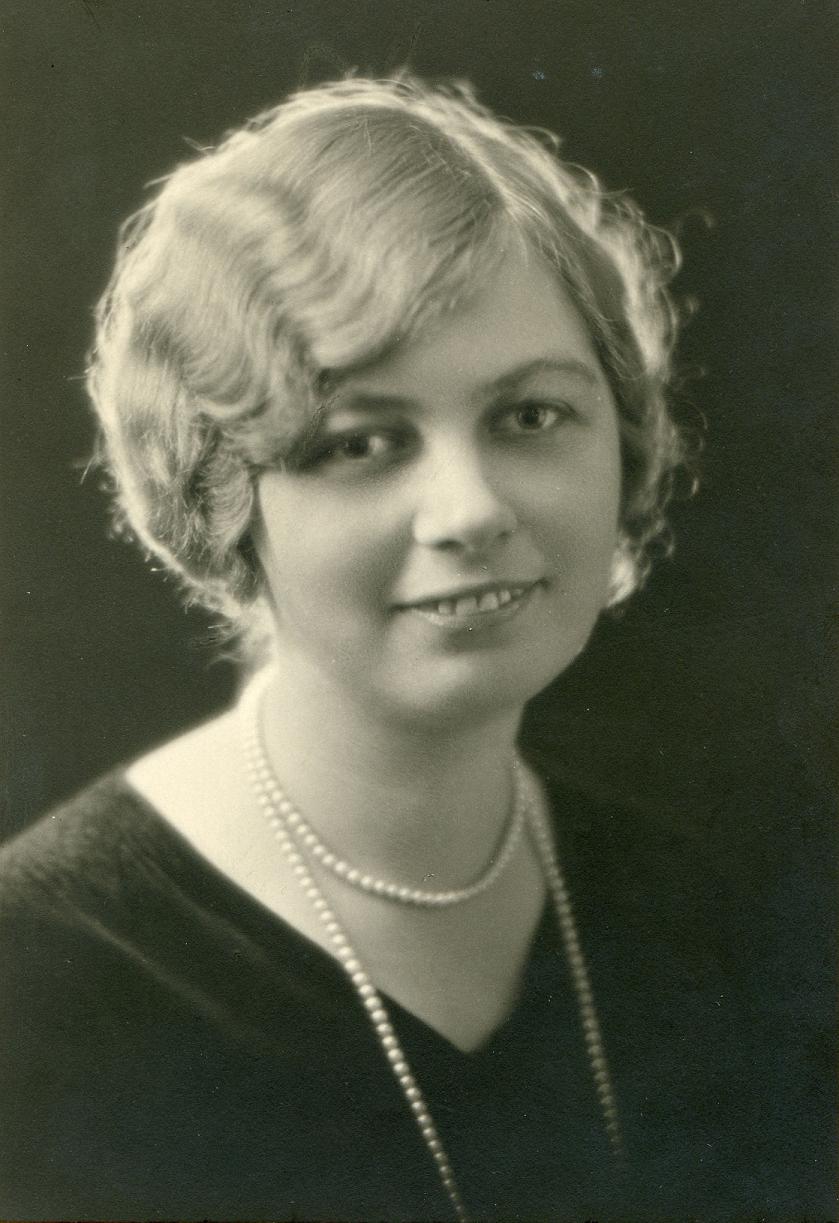
Joanna Asmus Sutorius, DVM, graduation photograph 1929 (Cornell University photo)
Johanna’s father, Henry Asmus, was no ordinary professor. In 1913, he took a position as a farriery instructor at the veterinary college. A building had been newly constructed for his students, and was “the very finest place of its kind to be found in the country;” a country where horses were still the dominant form of transportation. A preeminent farrier until his death in 1939, Henry Asmus’ horseshoes still hang on display in Cornell’s current farrier shop.

Cornell's DVM Class of 1929 with photo (bottom center) of Joanna Asmus, the college's fourth woman graduate. Cornell University photo.
Johanna began veterinary college immediately after completing high school, as was the norm for students in 1925. Johanna’s daughter, Barbara Sutorius, explains her focus on small animal medicine. “The farmers who provided the large animals for the student vets to practice on wouldn’t let her treat their animals, so she only worked with small animals.” When her daughters inquired as to whether she faced discrimination, Dr. Sutorius denied it was ever a significant issue. “She was determined to ‘show the fellows’ that she could do it,” said her niece, Marianne Leavitt. In a 1960 interview by The Post-Standard, a Syracuse newspaper, Dr. Sutorius admitted she encountered disbelievers early on, but “after they found out I meant to stay and get my degree, the boys made things pleasant for me.” Johanna spent the summer of 1928 at the Westminster Dog Hospital on West 54th Street in New York City. Drs. Frank Miller and Trelford Miller welcomed her help that summer, with the latter making reference to the fact he was a student of Henry Asmus.

Dr. Sutorius considered continuing her studies in Vienna following completion of the DVM program in 1929, but it was not to be. She moved to Sayville, NY that summer with her husband, where he remained employed in spite of the stock market crash and ensuing Great Depression. “It was her aspiration to start her own small animal practice there,” her daughter Nancy Holland explains. “However, she was a product of her times. Because my Dad could provide very well for us, it would have been considered a mark against him to have his wife go off to work.” Dr. Sutorius instead worked as a relief veterinarian in various small animal practices for two years, and resumed this role in full when her three children reached school age.

Thirty years after her graduation, Dr. Sutorius reflected on her experience as one of the first to break ground for women in the veterinary profession. “I enjoy this work, so it doesn’t seem like any effort at all,” she told the Post-Standard interviewer. She had remained active in organized veterinary medicine, taking the position of Secretary-Treasurer of the Long Island Veterinary Medical Association in 1947.

Since Dr. Sutorius began her schooling, much had changed for women in the profession. “There are about 200 women veterinarians in the country,” she stated in the 1960 article. “Some are in general practice, others teach and work in research. One woman works in a zoo. Most people are pleased that a woman is going to treat their pet; however, I have had people turn around and walk right out of the office!”

By the conclusion of Dr. Sutorius’ career, veterinary medicine had seen a sharp increase in the proportion of female students. At the time of her death in 1989, roughly half of all graduating veterinarians in the United States and Canada were women.

In recent years, Dr. Sutorius’ family took a renewed interest in her experiences in the veterinary profession. A visit to Cornell revealed Henry Asmus’ influence on the college, as evidenced by display cases featuring his work. While no physical monument exists to commemorate Dr. Sutorius and other early female veterinarians, the conspicuous abundance of women in the college is a compelling testament to their efforts as pioneers.


Author Michelle Pesce, Cornell's DVM Class of 2012, is from Massapequa on the southern shore of Long Island. Dr. Asmus Sutorius also lived and practiced on Long Island.

Michelle expresses appreciation to Dr. Sutorius' family -- her daughters, Mrs. Nancy Holland and Sister Barbara Sutorius, and her niece, Mrs. Marianne Leavitt -- for their contributions to this article.

Thursday, May 5, 2011

I want to be a Veterinarian: History of Veterinary Medicine 1940-1970.

By Donald F. Smith, Cornell University
Posted May 5, 2011


This historical blog is in recognition of the 150th anniversary 
of the American Veterinary Medical Association (1863-2013).

By 1940, only ten veterinary colleges in the United States remained open. Twenty others had closed since 1900, including those at Harvard, New York University, and George Washington University.

World War II created a huge need for veterinarians to serve in food inspection domestically and overseas, for development of vaccines anticipated in enemy attacks, and to accompany pack mules in combat with Japanese forces on the rugged Burma trail.

Male Studenta in Cornell's Veterinary Classes of 1943, 1944 and 1945 were members of the Army Specialized Training Progam.  Courtesy of Cornell University.

Veterinarians were in such short supply that colleges operated year-round. Dr. Morris Povar remembers the experience: Going to veterinary school during the summer was a hideous experience. The room must have been 90 degrees; no air.

After the war, hundreds of thousands of battle-weary veterans returned home and many wanted to become veterinarians, but only a handful of states had programs to educate DVMs. In Minnesota, it was the insistence of veterans with strong political ties who forced the legislature to establish a new veterinary program. In all, seven new veterinary colleges opened between 1944-48.

Glen Nelson was in the inaugural class at Minnesota. Most of us were veterans. We had a B17 pilot who was shot flying over France, a B29 pilot who flew over Nagasaki the day after THE bomb. I was a tank officer under Patten in North Africa. We had a POW, and another who was shot up pretty badly on Saipan. Going to the student center was like sitting around the American Legion Club.

Prior to 1945, only about 70 African-Americans had ever received DVM degrees, mostly from northern univerities like Iowa State, Kansas State and Cornell. But that all changed when Frederick Douglass Patterson, DVM, PhD became the third president of Tuskegee Institute and not only founded a veterinary college that continues to this day, but also was the principal force in establishing the United Negro College Fund.

Women, though sporadically admitted to veterinary colleges since 1910, were vastly underrepresented in the post war years when so many men squeezed them out of the few slots previously available.

Even through the 1960s, women were evaluated differently than men. Linda Reeve Peddie sat through her grueling interview at Cornell in 1961, They asked me if I cooked, if I sewed, if I danced. Did I date?  And then the question, ‘If you were to marry someone who had a vocation out in the desert somewhere and there weren’t any animals, just what would you do with this degree?’ I did not think there was a prayer that I would be accepted.

Fulfilling the desire to become a veterinarian is the dominant theme of my second article in a four-part series on veterinary education in the United States (1940-70). It is published in the Spring 2011 issue of the Journal of Veterinary Medical Education, Volume 38 (1), pages 84-99, and should be available in veterinary or medical libraries, or online services provided by these libraries.

For those how do not have access to the article and would like a copy, please contact me at the following e-mail address.

Comments are welcome at dfs6@cornell.edu

Tuesday, May 3, 2011

National Pet Week: My Puppy Pledge

By Donald F. Smith, Cornell University
Posted May 3, 2011

Join me in celebrating the 30th anniversary of National Pet Week (May 1-7) as we rededicate ourselves to the responsibilities associated with having a pet.


Beau, my 14-year-old PUPPY
 Over 70 million dogs are members of households, reaching every community of the United States with love and affection. As new puppies are added to families this week, our children should consider the obligations and enjoyment of having a dog.

One way to do that is to understand the meaning of the word, P-U-P-P-Y.

“P” is for pleasure, that effervescent joy that radiates from a well-cared-for pet. Dogs love to please, craving attention and play. In return, they provide friendship and unconditional love.

“U” stands for utility. Dogs were made to work: to pull a sled, to guide the blind, to fetch a stick, to swim, to protect the weak. Make sure you give your dog lots of exercise, which he or she needs for emotional as well as physical health.

The second “P” stands for presence. As you admire your dear puppy, also look around you and see all of nature’s creatures, both wild and domesticated. Your puppy is part of a world where animals of every kind fill an essential role in nature.

Puppy’s next “P” is perseverance. Acquiring a pet carries the obligation to take care of your dog, to train, to groom, to assure proper nutrition, to provide quality health and veterinary care.

Most importantly, it all comes down to you, the final letter of PUPPY.  Getting a pet will change your life. It will bond you with joy, with friendship, with commitment, and – yes – occasionally with sorrow. Because dogs have a shorter life span than people, they often leave us before we are ready.

As you welcome your puppy into your home and your heart, may you acquire a fresh and personal perspective on the wonder of animals and the world that we share with our pets.

Dr. Smith invites comments at dfs6@cornell.edu

Tuesday, April 26, 2011

Water For Elephants Trumpets Cornell

Posted by Donald F. Smith, Cornell University
April 26, 2011

A half century ago, Norman Rockwell painted an image of a young veterinarian examining a little boy’s dog. Partly obscured in the background is a Cornell University diploma. The year, 1963, was the centennial of the American Veterinary Medical Association. On the threshold of the AVMA’s 150th anniversary, another veterinary image has emerged in American pop culture and, once again, Cornell University is featured.


Cornell University College of Veterinary Medicine
Photo provided by Cornell.
 The movie, Water for Elephants, depicts a 1931 Cornell veterinary student who runs away during his final exams because of a family tragedy. Jacob Jankowski hops a circus train and claims to be a veterinarian. His prime charge was an Asian elephant named Rosie.

The movie follows Sara Gruen’s novel by the same title, including about 20 direct references to Cornell University and the Ivy League. For Cornellians everywhere―and especially for the 4,000 DVMs scattered across the country and around the world―there is great pride in seeing our college depicted on the big screen.

But how accurate is that depiction?  The following questions should test your knowledge of veterinary medicine at Cornell during the Depression. (Answers follow)

1.   Jacob Jankowski was forced to leave Cornell because his father (also a veterinarian) had mortgaged the family business to pay for his son’s tuition. How much was tuition during the Depression?
2.   How many women were in Jacob’s class? The movie highlights one who sits next to Jacob during his final examination, and appears to depict at least one other. In the novel, author Sara Gruen says there were four.
3.   A picture was seen for a fleeting second on the wall of the examination room when Jacob was leaving the room to learn of his parents’ death?  Was it the portrait of university founder Ezra Cornell or President Herbert Hoover?
4.   Did it take six years to become a veterinarian?
5.   Is the movie correct in describing the veterinary degree as Doctor of Veterinary Science?
6.   When did Cornell become part of the Ivy League?
7.   Would Jacob have lived with his parents while attending college?
Answers:
1.   Because of the land grant agreement, there was no tuition for New York State students until the 1960s. This challenges the movie’s central premise that the Jankowski family lost everything because of tuition payments?
2.   Though Cornell’s first woman veterinarian graduated in 1910, most classes in the next 30 years -- including Jacob's class -- had none. The Class of 1940 was the first to have four women.
3.   Though not an exact depiction, it appears to be an image of the veterinary college’s first professor and dean (principal), James Law.
4.   It did not: four years after high school was the prescribed length at that time. The youngest member of the Class of 1931 was the recently deceased Dr. Lawrence Waitz. He entered Cornell at age 16 and graduated at 20.
5.   Except for the period before 1896 when the degree was Bachelor of Veterinary Science (in the British tradition), the Cornell veterinary degree has always been Doctor of Veterinary Medicine.
6.   The Ivy League was not established until 1954.
7.   Almost certainly not. Most students were poor, living in modest single rooms near campus.
Enjoy the movie!
Dr. Smith welcomes comments at dfs6@cornell.edu

Monday, April 25, 2011

Water for Elephants is Not Enough: The Disease that is Killing Baby Elephants

Posted by Donald F. Smith, Cornell University
April 25, 2011

Like millions of other movie-goers, I watched Water For Elephants on opening weekend. As remarkable as the story and the acting by Reese Witherspoon, Robert Pattinson, Christoph Waltz and supporting cast was, it was elephant Rosie’s performance that was totally captivating. Her grace and elegance, her ability to collapse, expand and trumpet that 9,000-pound frame was nothing short of breath taking.

Foreground: Tai, who stars as Rosie in "Water for Elephants", and her nephew, JP, who succumbed to a devastating Herpes viral infection in February, 2011. Please consider donating to the research efforts to stomp out this killer. Photo provided by Kari and Gary Johnson, Have Trunk Will Travel.

As Rosie’s veterinarian, Dr. Linda Peddie told me when I interviewed her in February, “Tai (who plays Rosie) is the best-trained and most mature elephant in the world.”
Some people watching the movie were horrified by the images of animal cruelty depicted towards Rosie. However, Gary and Kari Johnson, the husband-and-wife owners and trainers of Tai, were absolutely adamant that nothing harm her, either physically or emotionally. For example, during the depiction of Waltz’s most severe beating of Rosie, the handlers gently moved Tai out of harm’s way. Again Dr. Peddie, “Because Tai has never known mistreatment, she does not view the flailing rampage as anything more than some imbecile beating the air."

Even though there is superb care, veterinary attention, and humane treatment of Tai and the other five elephants at the Johnsons' ranch Have Trunk Will Travel, they have been affected by a devastating and unseen virus that kills elephants worldwide. It is a relatively new viral disease called Elephant Endotheliotropic Herpes Virus (EEHV), and it affects baby elephants in both captivity and in the wild with devastating results. Tai’s “nephew”, a 3½ year-old baby named JP―named in honor of veterinarian Dr. Jim Peddie―died in February, 2011. As is typical of babies with EEHV, the uncontrollable hemorrhaging disease killed JP in less than 48 hours.
JP’s death represented another tragic loss in the elephant world, not only because of the personal anguish at the Have Trunk Will Travel Ranch, but also because it highlights the sad reality that there is as yet neither a cure, nor a vaccine, for this deadly virus.

Research to prevent, manage and treat EEVH is being led by a consortium of veterinarians and biomedical researchers at the following institutions:
·         Smithsonian’s National Zoo
·         Baylor College of Medicine
·         Cornell University College of Veterinary Medicine
·         Johns Hopkins University
Please consider Donating!
To support research to stomp out the disease that is responsible for the deaths of about 25% of the baby elephants born in the United States in the last three decades, please donate to:

The International Elephant Foundation (IEF), a 501 C (3) non-profit organization. http://www.elephantconservation.org/elephant-endotheliotropic-herpes-virus/.  

Tuesday, April 19, 2011

Letters of Recommendation for Veterinary Students

By Donald F. Smith, Cornell University
Posted April 19th, 2011.

This blog addresses recommendation letters, both for students preparing their applications for veterinary college, and for current veterinary students applying for jobs and internships.

Selecting the right people to write your reference letters is the most important decision. The people you ask to write letters should:
  • Know you and your work. Avoid having a well-known person (eg. legislator, dean) write your letter unless they know you and your accomplishments well.
  • Be well-known in the professional community. A good rule of thumb is to ask the most prominent and respected people who also know you well.
  • Not be too familiar personally. You should usually avoid letters from family members, neighbors and clergy unless specifically requested.
  • Be responsive, reliable, and prompt in writing the reference letter.
  • Provide an articulate and concisely-written reference, avoiding hyperbole or exaggeration.
  • Make your letter unique to you, your circumstances, and the college or position for which you are applying. I acknowledge that the electronic veterinary college application service (VMCAS) makes it difficult to specify individual colleges.

The reference letter should contain at least five parts, usually in the following order:
  1. Description of how long the reviewer has known you, and under what circumstances.
  2. If a working situation, the letter should describe your employment responsibilities, and how the work has progressed as you have gained experience and competence.
  3. Description of your attributes, including both technical and personal qualities in specific terms to your situation. Letters with platitudes and non-specific descriptions are unhelpful in distinguishing you from other candidates.
  4. Narrative of your technical competence, personal and professional qualities, creativity, intellectual stimulation, and progress in your work or studies.
  5. Comparison of your suitability for the position with other candidates previously evaluated.

You should determine ahead of time if your evaluator has concerns about recommending you. At an early stage in the process, meet with your prospective evaluator, describing the reason you are requesting a reference, and asking them if they feel comfortable providing a highly supportive letter. Because some reviewers may have a hard time acknowledging their concerns to you directly, you should frame your question in a manner that allows them to express lack of enthusiasm or other possible clues to their lack of full support.

After you decide to request a letter, provide him/her with your resume and a series of bullet points outlining those experiences and attributes that you feel might be helpful for your application. Remember that most reviewers will be writing letters for several applicants and any help you provide will likely be appreciated.

Except in the most unusual circumstances, waive your right to see the letter. Failure to waive your right of confidentiality may mean that the letter will not be taken seriously. It may not even be read!

Consider it your responsibility to ensure that the letter is actually written and gets to the evaluator on schedule.

If you are disappointed that you do not get the position you seek, feel free to follow up with both your evaluator and the institution/employer. To inquire specifically about the contents of a letter is unprofessional and may even imply a breach of ethical judgment. You can, however, ask both parties if there is anything you could do regarding your evaluations to improve your chances in a subsequent year.

Dr. Smith invites comments at dfs6@cornell.edu

Thursday, April 14, 2011

VETERINARY CLASS OF 2015: READY! SET! OPTIMIZE!

Author, Donald F. Smith, DVM
Date of posting: April 14, 2011

Congratulations to you who have been accepted to one of the U.S. veterinary colleges this fall. As you anticipate starting classes in just four months, let me offer some specific suggestions.

READY!  Don’t waste this Summer.  Whether you need to work, take a vacation to re-energize before classes start, or reconnect with family and friends, plan this summer in a purposeful manner. Don’t just ‘let it happen’. Determine what your personal, professional and financial goals will be for the fall, and establish a plan to achieve all of them.

Write a thank you note to those in your support network, the veterinarians and mentors who inspired your interest in animals and medicine, and your parents and family members who encouraged and helped you achieve your goals.

SET!  Get to know your College and Begin to Explore the Profession:  Every veterinary college has a story and a legacy. Discover the historical roots of your school, perhaps online or in a book commemorating an anniversary. Search your college’s web site, identify faculty whose interests match yours; write to them, introduce yourself, and make plans to meet them this fall.  

Resolve to learn about what it means to be a DVM (or VMD). Veterinary medicine is a versatile profession because the breadth and scope of our activities are almost limitless. Discover opportunities available to veterinarians beyond your own interest in shelter medicine, zoological medicine or equine practice. Read a great book on some aspect of veterinary medicine, for example, the biography of Dr. James Steele; and also on human medicine, for example, the biography of Dr. William Halsted (I have referenced these two on the side bar to this blog). Periodically check for veterinary news on the web: I find the AVMA http://www.avma.org/ and DVM360 sites http://www.dvm360.com/ excellent for this purpose. Also check out your state and regional veterinary association.

OPTIMIZE!  Prepare for next summer now: Your experience next summer (2012) may be one of the most important learning opportunities in your first year. Start planning now by talking to upper class students, faculty, advisors. For many students, getting out of the university town is important so you can experience the practical world of veterinary medicine. If you don't have a paying veterinary job for next summer, and earning money is important (as it will be for most of you), consider working part time as wait staff in a local restaurant during the afternoons and evening – and pursue your veterinary career during periods of times when you are not working (such as shadowing a veterinarian, working at dog or horse shows, or volunteering in a nursing home that uses animals).

Finally, I invite you to write about your experiences and goals in the comment section of this blog, sharing your ideas, challenges and opportunities. The veterinary community is small, so let’s take advantage of each others’ experiences and wisdom.

Dr. Smith invites comments at dfs6@cornell.edu.

A Letter to Sasha and Malia Obama on the Second Anniversary of Bo's Arrival

Bo Obama arrived at 1600 Pennsylvania Avenue two years ago today (April 14, 2009). A six-month-old puppy at the time, he fulfilled the president’s campaign promise to his daughters to get them a dog.

Months earlier, when Bo was just a month old, I presented the homily for the “Blessing of the Animals Service” at All Souls Unitarian Church in New York City. The centerpiece of my homily was an open letter to Sasha and Malia, describing how bringing a dog into their lives would provide great joy, but also new and lasting responsibilities.

What follows is an abstract of my homily that day, which I share with current and future dog lovers as a reminder of the wonderful pleasure and obligations that pets bring to our lives.

My words to you this afternoon will reflect upon one of the most popular animal stories of the year, the acquisition of a puppy for Sasha and Malia Obama. Let’s meditate upon our own relationship with animals through this open letter to the Obama girls.

Dear Sasha and Malia,

We, the assembled animal lovers at All Souls Unitarian Church in New York City, are excited that you are about to embark on a wonderful journey with a puppy.  What an inspired way to ease your transition to Washington.

Do you know what the letters of PUPPY stand for? Here is our interpretation….

“P” is for pleasure, that effervescent joy that radiates from a well-cared-for pet. Dogs have two sides to their brains, one side is to please and the other is to work. The pleasing side craves attention and friendship which, when supplied in abundance, yields a strong return on investment.

But there is more to a puppy than all that is pleasurable, because the “U” stands for utility.  This side of the dog’s brain wants to work: to pull a sled, to guide blind people, to jump and fetch a stick, to swim, or protect the weak. Not all such activities are possible in Washington, of course, but I’m sure you can develop some creative activities for your puppy, perhaps at Camp David.

The next “P” stands for presence. As you admire your dear puppy, take a moment to sense the presence of the rich wholeness of the earth and all the abundant manifestations of nature.

Puppy’s third “P” is perseverance. Acquiring a pet carries the moral obligation to take care of your dog, to train, to groom, to assure proper nutrition, to provide quality health and veterinary care. Moral outrage occurs when pets are sickened or injured by humans. But other times, pets are harmed inadvertently, such as the dog who develops pancreatitis from eating table scraps, or the dog who indiscriminately bites strangers because of lack of training. With pets, the sins of omission may be as serious as those of commission.

And what happens if you get tired of your pet, when you have friends over who do not like dogs, or if your boyfriend turns out to me more exciting than your puppy, or when you go off to college?  Never forget that perseverance and commitment represent a two-way street.

As always in life, it all comes down to you, the final letter of PUPPY.  Getting a pet will change your life. It will bond you with joy, with friendship, with commitment, and – yes – occasionally with sorrow. Because dogs have a shorter life span than people, we have several opportunities to have them join our family. In this way, they can meet special and unique needs at different stages of life.

Sasha and Malia, you are now at the beginning of your adventure with a puppy. May the joy that you derive and the comfort that you receive, create for you a fresh and personal perspective on the wonder of all animals and the world that we share with them.